
1990s
Connectivity

Trust · Security · Human Presence
The Human Presence Layer
for the Digital World.
Digital systems can verify identities, credentials, and devices.
HVI provides the missing infrastructure layer, establishing
when a human is actually present and participating.
The Evolution of Digital Trust
The Internet Was Built to Connect People.
The Next Era Requires Knowing When
Humans Are There.
2000s
Security
2010s
Identity
2020s+
Human Presence
The Missing Layer
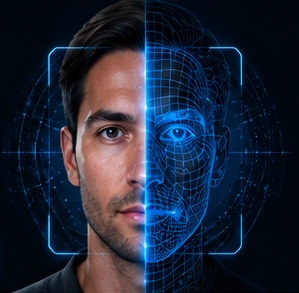
Identity is not enough.
Existing systems can verify accounts and devices,
but cannot determine if a human is actually present
and participating.
IdentityWho are you?
AuthenticationCan you access?
AuthorizationWhat can you do?
Human PresenceAre you actually participating?
Real World Risks · Real World Losses
A familiar voice. A convincing face.
A very real loss.
Voice clones and deepfakes can turn recognition into a point of attack. A call can sound like a family member. A video can appear to show an executive. A fabricated relationship can feel personal enough to persuade someone to move money, share access, or act before checking.
01Executive impersonation
HK$200 million
A fabricated executive video conference
Hong Kong authorities reported a January 2024 case in which a deepfake video conference led an employee to authorize transfers to five bank accounts. The reported loss was about HK$200 million.
Hong Kong Government · June 26, 202402Relationship fraud
More than HK$360 million
Deepfakes used to build false relationships
In October 2024, Hong Kong police dismantled a syndicate using deepfake-enabled online dating to lure victims into cryptocurrency investments. Authorities reported that the case involved more than HK$360 million.
Hong Kong Government · December 18, 202403Voice cloning
The voice on the phone
Impersonation reaches families and businesses
The U.S. Federal Trade Commission warns that cloned voices can be difficult to distinguish by ear and can be used in fraudulent extortion targeting families and small businesses. A recognizable voice alone is no longer sufficient evidence of who is speaking.
Federal Trade Commission · November 16, 2023These are specific reported cases and official warnings, not an estimate of worldwide deepfake losses. Amounts are in Hong Kong dollars; the second figure is the reported amount involved in that case.
The Future of Everyday Trust
When people cannot tell who is real, trust becomes harder to give.
As synthetic voices, faces, and conversations become more convincing, the risk extends beyond the next fraudulent payment. People may hesitate to answer a loved one, follow a colleague’s instruction, believe a public message, or engage with an unfamiliar business. Legitimate interactions can carry more suspicion, more verification steps, and more delay.
This is a forward-looking risk, not a measured prediction: repeated uncertainty could weaken confidence in digital communication across the population. The burden should not fall entirely on each person’s ability to spot a fake.
The Human Presence Layer
Trust needs evidence within the interaction.
HVI is being developed to add evidence of human presence and participation alongside identity and access controls. The goal is to help systems make trust decisions with more than a convincing voice, image, or account.
Human presence alone does not prove identity or honest intent. It must work with independent identity checks, transaction safeguards, and validated assurance.
Explore HVISee HVI in Operation
Can your system tell
the difference?
Experience a demonstration of human presence verification. See how HVI is designed to distinguish real human participation from synthetic impersonation attempts.
Launch HVI1 Real User

- IdentityVerified
- DeviceVerified
- Human PresenceVerified
- SessionTrusted
2 AI Impersonation

- IdentityCopied
- VoiceMatched
- Human PresenceFailed
- SessionBlocked
3 Trusted Interaction

- IdentityVerified
- Human PresenceVerified
- Liveness SignalsActive
- SessionTrusted
Illustrative scenarios. Launch HVI to use the connected reference beta.
HVI Platform Architecture
Built as infrastructure.
HVI is designed to become the foundational layer for trusted human participation across government, enterprise, and critical systems.
Explore the Architecture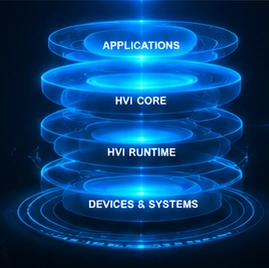
Government
Enterprise
Finance
Healthcare
Communications
AI Systems
Policy Engine
Trust Decisions
Attestation
Audit & Compliance
Device Integration
Local Processing
Permissions
Sensors
Where Human Presence Becomes Mission Critical
 GovernmentTrusted digital services and secure communications
 Financial ServicesProtect high-value transactions
 Defense & Critical InfrastructureReduce adversarial risk in sensitive environments
 HealthcareVerify human participation in critical systems
 EnterpriseSecure collaboration and reduce fraud
 AI SystemsDefine the boundary between humans and autonomous systems
Questions about Human Presence
Understand what you can rely on.
Explore the purpose, practical use, and current limits of the reference beta.
Does human presence prove someone’s identity?
No. Presence and identity answer different questions. A human can be present while using someone else’s account or making a fraudulent request. HVI is intended to work alongside identity checks, access controls, and transaction safeguards.
Explore the trust layersWhat can I use in this installation today?
HVI Access includes accounts, small-group meetings, session notices, presence evidence, the Verification Inspector, signed attestations, a verifier, organization records, and audit views. The policy is a reference model that needs evaluation before wider reliance.
See the working flowDoes HVI guarantee that a voice or video is genuine?
No. The beta observes participation signals and returns reference policy results. Its scores are not validated probabilities of authenticity, and a state labeled VERIFIED does not guarantee that a person is genuine, authorized, or honest.
Read the technology and assurance limitsWhere does camera and microphone information go?
The local vision engine processes observations in the browser when available. The scoring API receives summaries, while meeting media is shared with other participants through WebRTC. The server also stores account, session, consent, evidence, and audit records.
Review the complete data explanationCan developers integrate with the existing API?
The installed same-origin JSON API exposes runtime information, session actions, evidence, and verification tools. A production SDK and a general cross-origin or service-to-service integration are not included. Define authentication, authorization, data boundaries, and assurance requirements for a pilot.
Open the developer referenceHow should an organization start?
Choose a specific interaction and the decision it needs to protect. Identify existing controls, permitted signals, failure paths, and measurable pilot criteria. Use the reference app to explore behavior, then validate the complete workflow.
Discuss a pilotBring Human Trust into Your Digital Infrastructure
Ready to explore what HVI can do for your organization?
Join the conversation with government agencies, enterprises, and technology leaders building a more trusted digital world.